
Unlocking Supply Chain Intelligence with Web Data and Evidence-Led, Transparent AI.
In a world defined by interconnection, few systems are as intricate or as fragile as supply chains (remember the Covid period). Organisations today depend on multi-tier supplier networks that span continents and industries. Yet, beyond their immediate suppliers (Tier 1s), visibility often fades. The deeper one looks into the supply chain, the murkier the picture becomes. At the same time, geopolitical uncertainty, trade tariffs, or ESG reporting requirements have made supply chain transparency not just a competitive advantage but a regulatory and reputational imperative.
Corporations and governments increasingly have to do more due diligence (DD) on their clients and suppliers, and there’s a growing challenge in tracking regulatory changes. This trend will only grow.
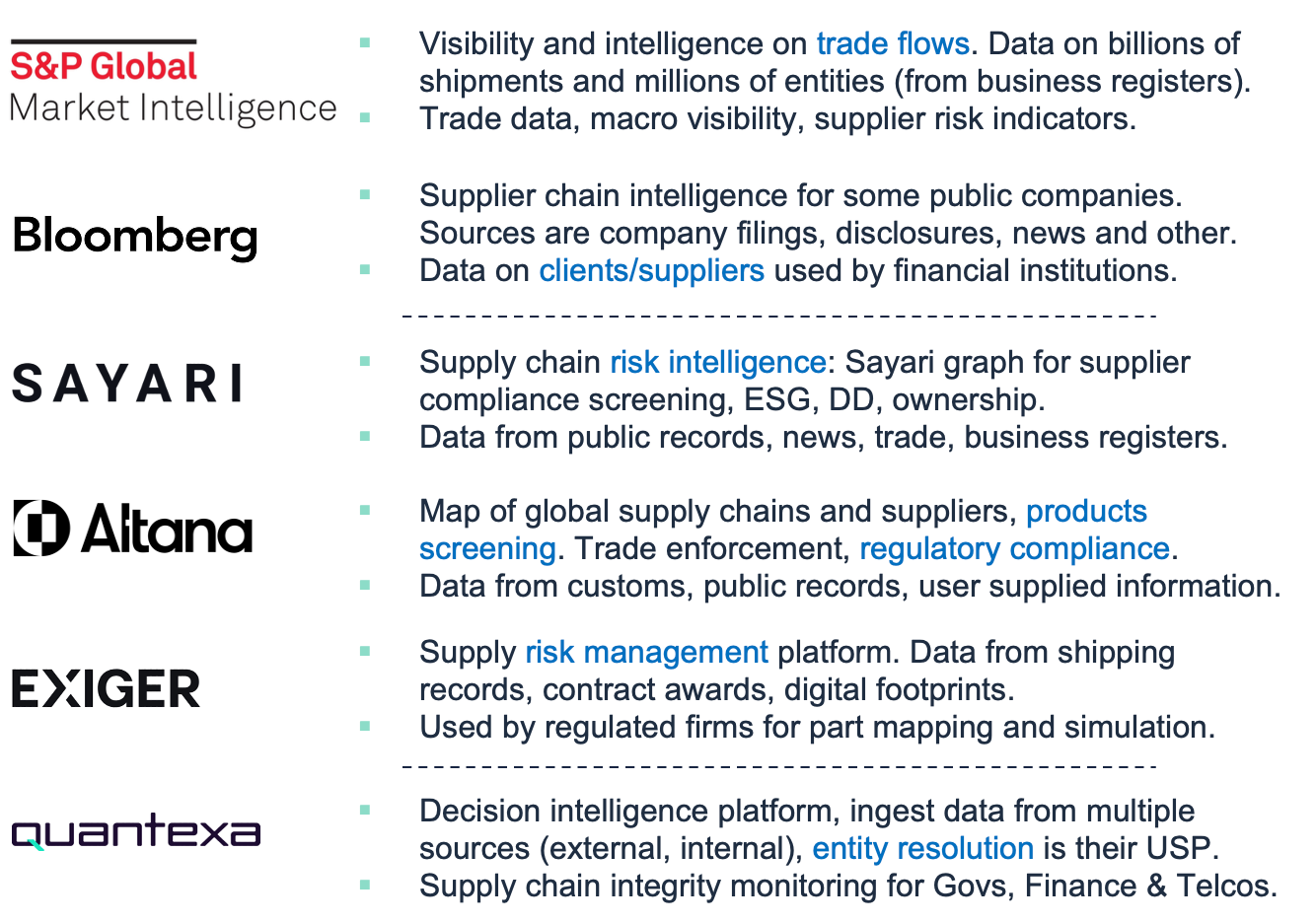
There are many supply chain intelligence products. Some rely on trade and customs data, product information, adverse media company filings or official business registers. Below we list some of the key players:
The Trust Gap in GenAI-Powered Company Research
The rise of Large Language Models (LLMs) has transformed access to information. But while they excel at generating fluent content, they struggle with truth. Hallucinations and a lack of traceability make them unsuitable for critical applications where accuracy and evidence matter. For 1 billion users, hallucinations might be acceptable. For governments, regulators, and global enterprises dealing with mission-critical applications, it is not. And supply chains are critical. There are ‘deep research’ options offered by OpenAI, Google Gemini, Anthropic (Claude), Perplexity, and others suffer from the same problem.
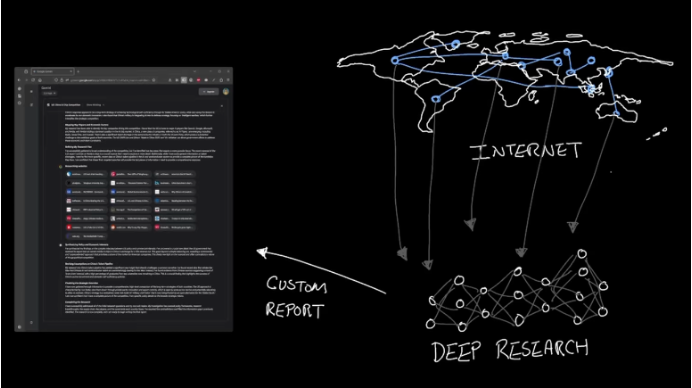
At Glass.AI, we have pioneered a fundamentally different approach based on transparent, evidence-led AI. It’s now possible to deep-read the world’s digital universe and map and track company linkages at scale with results that are always verifiable, contextual and trustworthy. No hallucinations.
Mapping and Tracking: Our Two Pillars of Supply Chain Intelligence
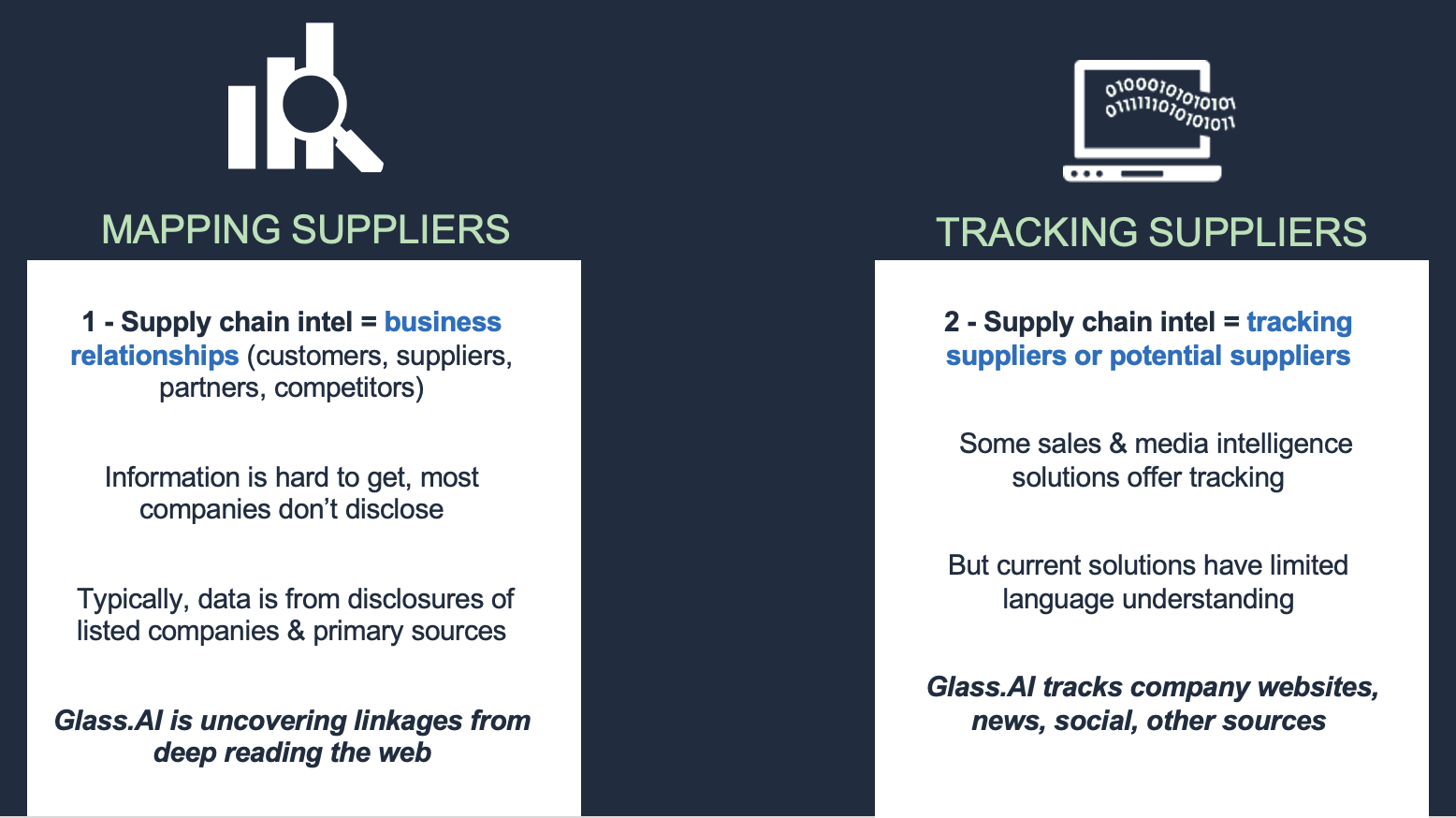
Transparent AI enables two complementary capabilities that together redefine supply chain intelligence: Mapping and Tracking.
1. Mapping Supplier Relationships
Supply chain relationships are often hidden in plain sight — buried within company websites, logos, case studies, press releases, external news, social media, job ads, job roles, and official datasets. We’ve built an AI research capability that reads across these sources to uncover business linkages between companies: that is, mentions of clients, suppliers, partners, joint ventures and other forms of collaborations.
With our AI that reads the web, we can build a living, dynamic map of supply chains that extends beyond tier-1 visibility to show the full network of dependencies and interconnections. Moreover, we can identify many attributes about the suppliers (more on this later).
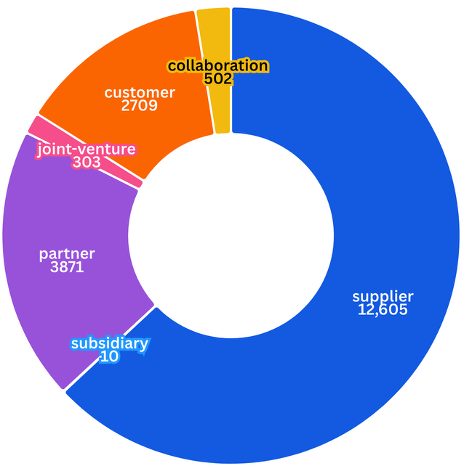
Case study: In recent research conducted for a government, we identified more than fifteen thousand previously unknown company linkages across just 50 key firms, demonstrating how much intelligence is available on the web and how critically supply chains intersect across industries and geographies. We are convinced we just scratched the surface — our AI is already uncovering more linkages as feedback is provided.
2. Monitoring Supplier Activity and Risks
Supply chains evolve constantly. Ownership structures change, suppliers expand or contract, some go bust, rogue, or even commit fraud. Once we’ve mapped the suppliers through our discovery and/or enriched the list of suppliers provided by the organisations, our tracking capability continuously monitors the web and official sources to detect positive and negative signals about companies and relationships.
This enables organisations to:
- Receive early-warning alerts on supplier risk or compliance issues.
- Detect emerging vulnerabilities or ESG red flags.
- Maintain ongoing due diligence without manual research overhead.
Case study: For the UK Department for Business and Trade, we provided an “X-ray” of both positive and negative supplier signals — helping analysts anticipate disruptions and policy implications before they appeared in traditional datasets.

From Hidden Links to Strategic Foresight
With our Transparent AI that reads the web, organisations can move from fragmented data on supplier chain intelligence to a more holistic understanding. We also work with supply chain intelligence tools that leverage our AI to scan the web and uncover more intelligence.
As the world becomes more interconnected and unpredictable, better visibility of supply chains will define resilience. Our AI that reads and understands textual data is already playing its part by uncovering company linkages that were previously hidden and tracking millions of companies and all sorts of positive and negative signals.
Get in touch if you want to learn more about our supply chain intelligence capabilities: info@glass.ai.