
On 5 November 2026, Glass.AI and Digital Catapult hosted the third edition of Breakfast Byte, bringing together more than 70 public-sector analysts, economists, consultants, evaluation specialists and researchers in London to explore innovative approaches to evaluating public programmes and measuring their impact.
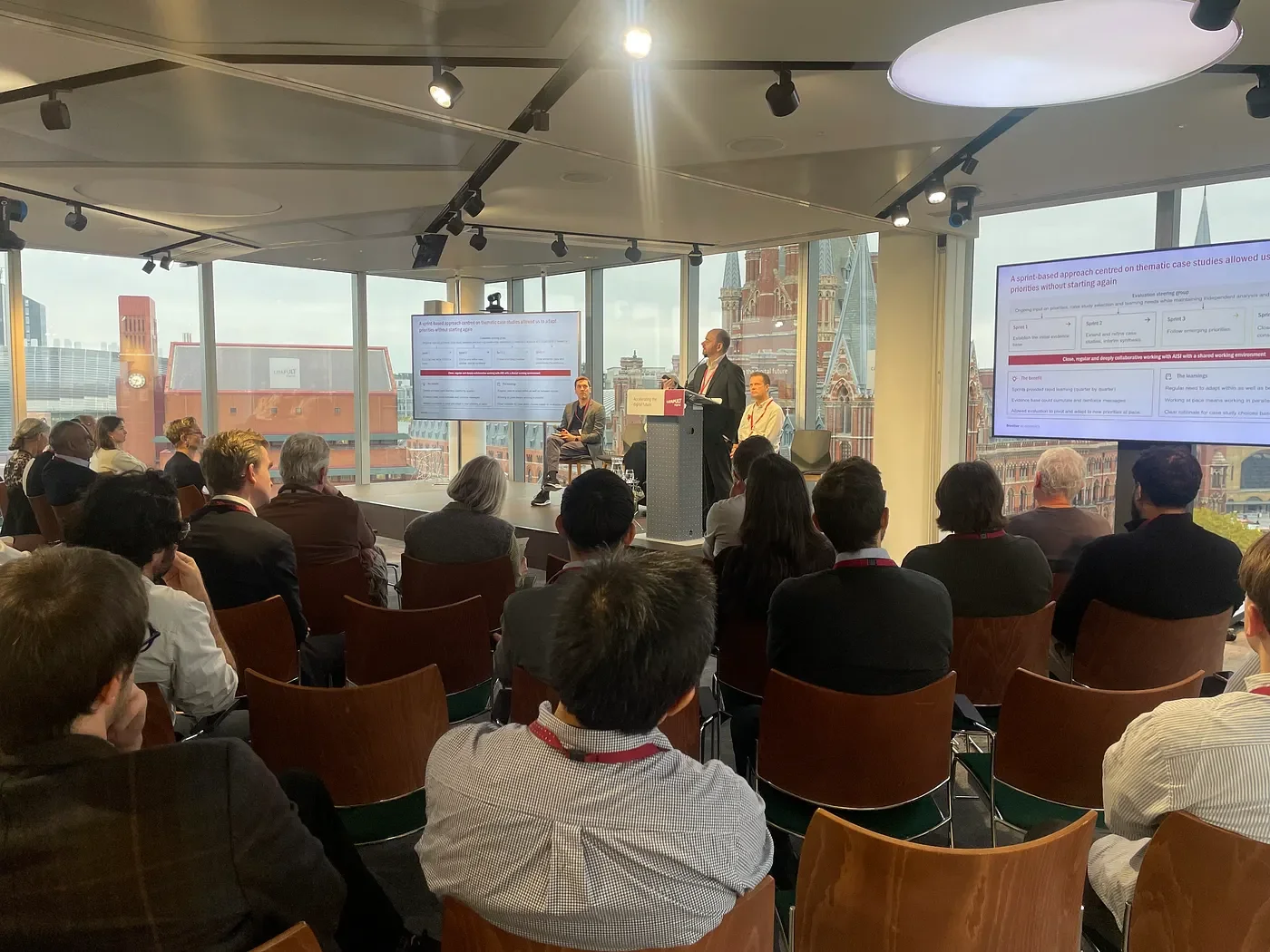
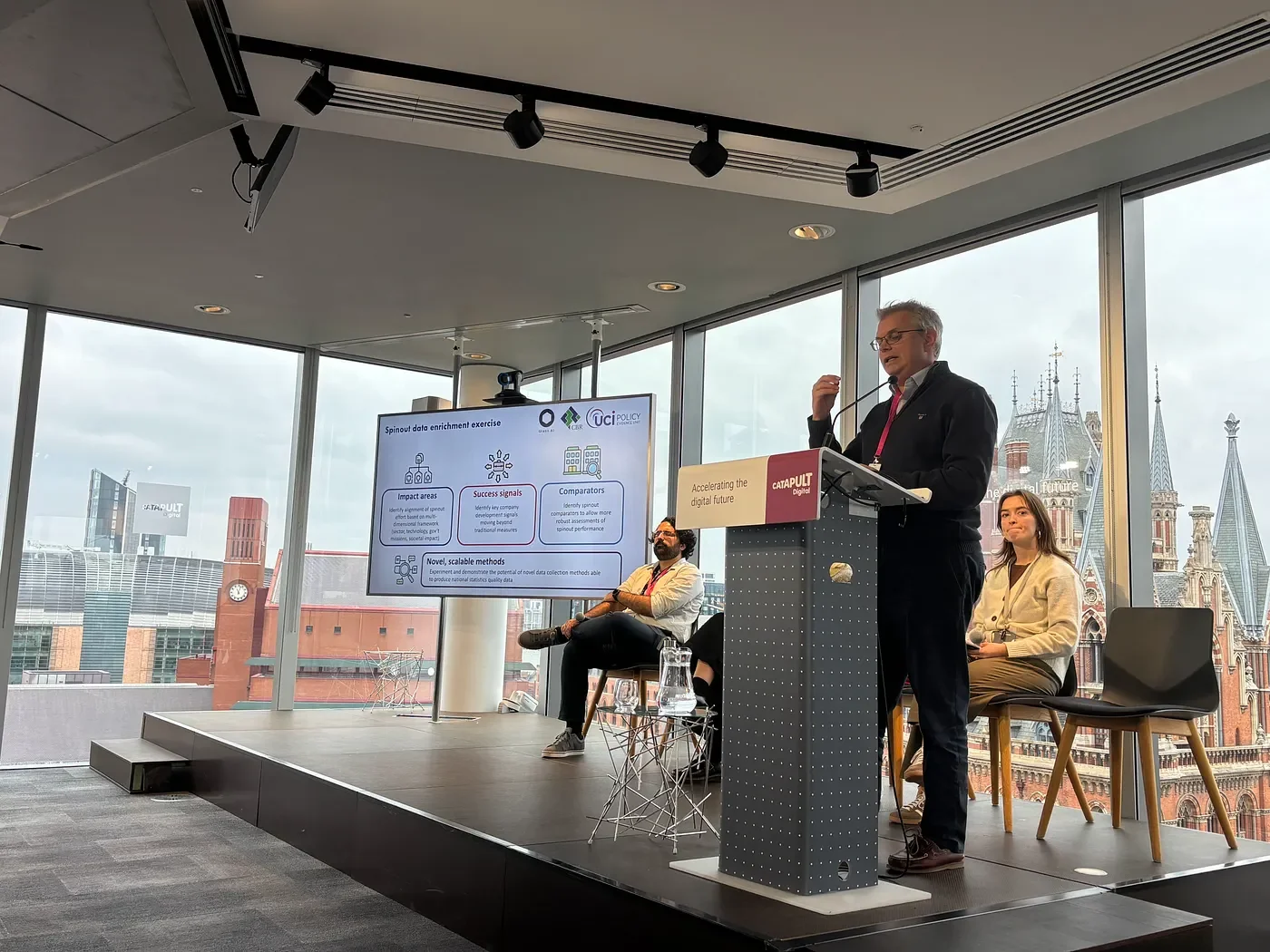
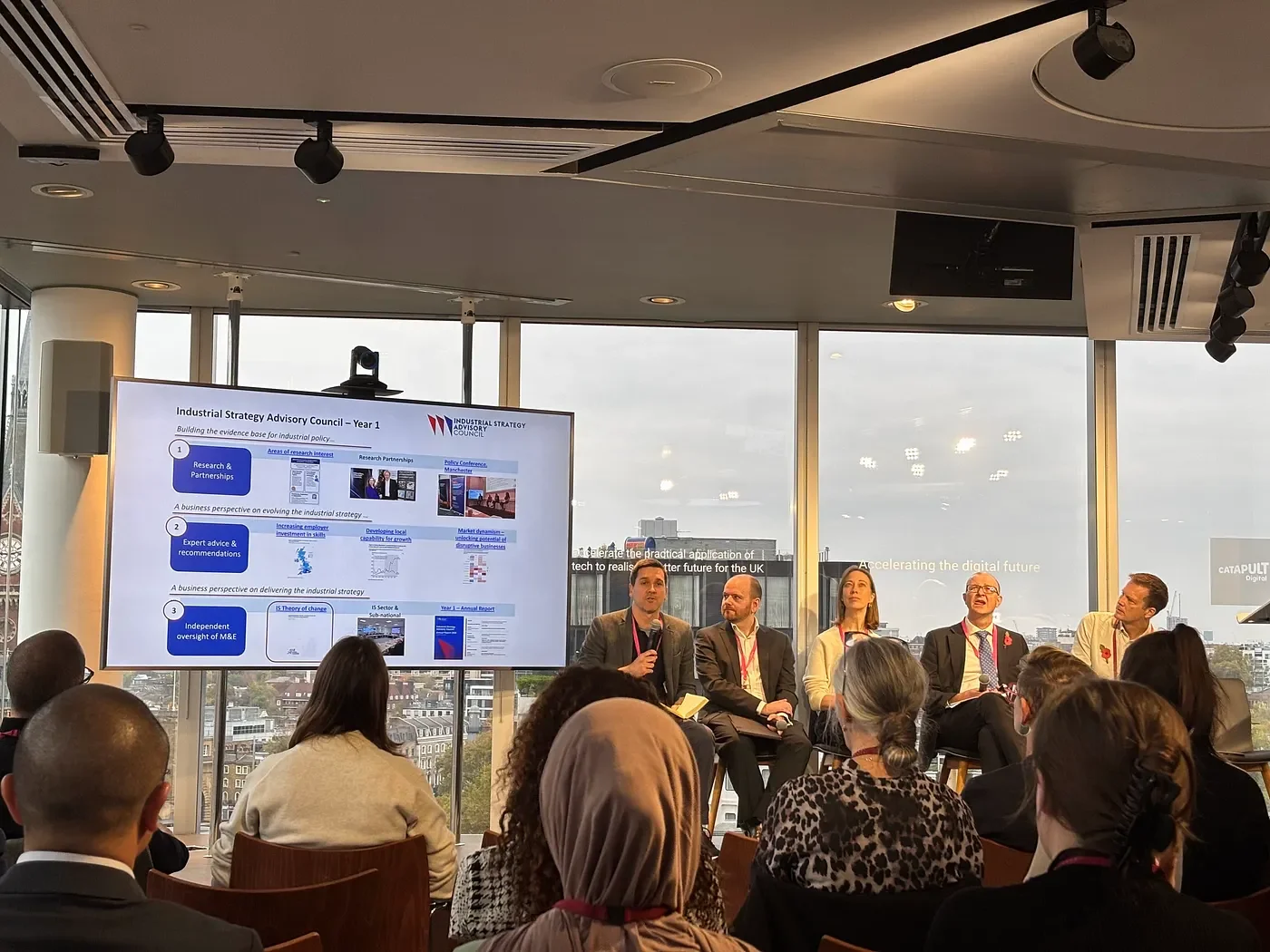
The event featured two panel discussions with experts from Government, leading consultancies, research institutions and academia.
Speakers included Jonathan Bateman from the Industrial Strategy Advisory Council (ISAC), Andrew Leicester from Frontier Economics, John Curnow from London Economics, and Martha Bicket from CECAN and the University of Surrey.
The second group of panellists included Catherine Mottram from the Department for Culture, Media and Sport, Tomas Coates Ulrichsen from the University of Cambridge, Lisa Müller from Connected Places Catapult and Noel Miranda Martinez from Ipsos UK.
Together, they explored how evaluation methods are evolving, the opportunities presented by AI, and the importance of building stronger evidence to inform public policy.
A recurring theme throughout the discussions was the need to move beyond traditional, retrospective evaluations towards approaches that support continuous learning, capture more complex outcomes and make better use of emerging technologies and data sources.
Some key takeaways
1. Evaluation needs to support learning, not just measure outcomes
Traditional evaluations often focus on assessing results after programmes have been delivered. However, complex public interventions require more flexible approaches that generate insights throughout their implementation.
The discussions explored methods such as sprint-based evaluation, process tracing and participatory systems mapping, which can help policymakers adapt programmes as evidence emerges.
A clear theory of change, robust baselines and consistent analytical frameworks remain essential to understanding what works, why it works and how individual interventions contribute to broader strategic objectives.
2. Understanding impact requires richer and more connected evidence
Conventional indicators such as employment, turnover and investment provide valuable information, but often fail to capture the full economic, technological and societal impact of public interventions.
Combining evidence from multiple sources, including companies, institutions, technologies and investment activity, can reveal wider effects and connections that traditional datasets may miss.
Speakers also highlighted the importance of involving stakeholders directly in the evaluation process, not simply as subjects of research but as active contributors to shaping questions, interpreting evidence and informing decisions.
3. AI offers new opportunities to strengthen evaluation methods
AI can help researchers gather, analyse and connect evidence at a scale that would be difficult to achieve through conventional methods.
Applications discussed included literature reviews, evidence discovery, qualitative analysis, cross-checking and ongoing monitoring of outcomes.
However, the discussions also emphasised the importance of transparency, validation and human oversight. AI should support researchers in producing more comprehensive and timely evidence, while leaving critical interpretation and judgement in human hands.
Bringing new evidence into public sector evaluation
For Glass.AI, the discussions reinforced the growing importance of combining established evaluation methods with new approaches to gathering and analysing evidence.
Our Transparent AI technology conducts deep research across the web to identify organisations, understand their activities and track changes over time. This can help researchers build richer evidence bases, particularly when assessing emerging sectors, innovation ecosystems and the longer-term impact of public interventions.
The opportunity is not to replace traditional methods, but to complement them with granular, timely and verifiable intelligence.
Thank you to our speakers and participants
A big thank you to Digital Catapult for co-hosting the event, to all eight speakers for sharing their expertise and experiences, and to everyone who joined us and contributed to the discussions.
Breakfast Byte continues to provide a forum for bringing together the research and policy community to exchange ideas, share practical experiences and explore new approaches to complex research challenges.
We look forward to continuing these conversations at future events!.
Read the full event takeaways and see more photos: Breakfast Byte 3 — Innovative Methods in Evaluation and Impact Assessment.