

The UK Government has published its UK Software Market Analysis, providing a detailed picture of the size, structure and dynamics of the UK's software sector.
Led by Plexal and commissioned by the Department for Science, Innovation and Technology (DSIT), the research combines extensive market mapping with industry interviews and surveys to better understand software developers, resellers and cloud providers, and the implications for software security policy.
Glass.AI played a central role in the study, applying its evidence-based AI technology to discover, analyse and categorise 62,339 software companies operating across the UK. Our research provided the underlying quantitative dataset used to assess the sector's composition, geographical distribution and business characteristics.
Key findings: A large, diverse and highly fragmented sector
The research reveals a complex software ecosystem, dominated by small businesses and encompassing a wide range of activities, from software development to distribution and infrastructure.
Some of the main findings include:
62,339 software companies identified. The research provides a comprehensive baseline of companies operating across the UK's software market, within the study's defined categories.
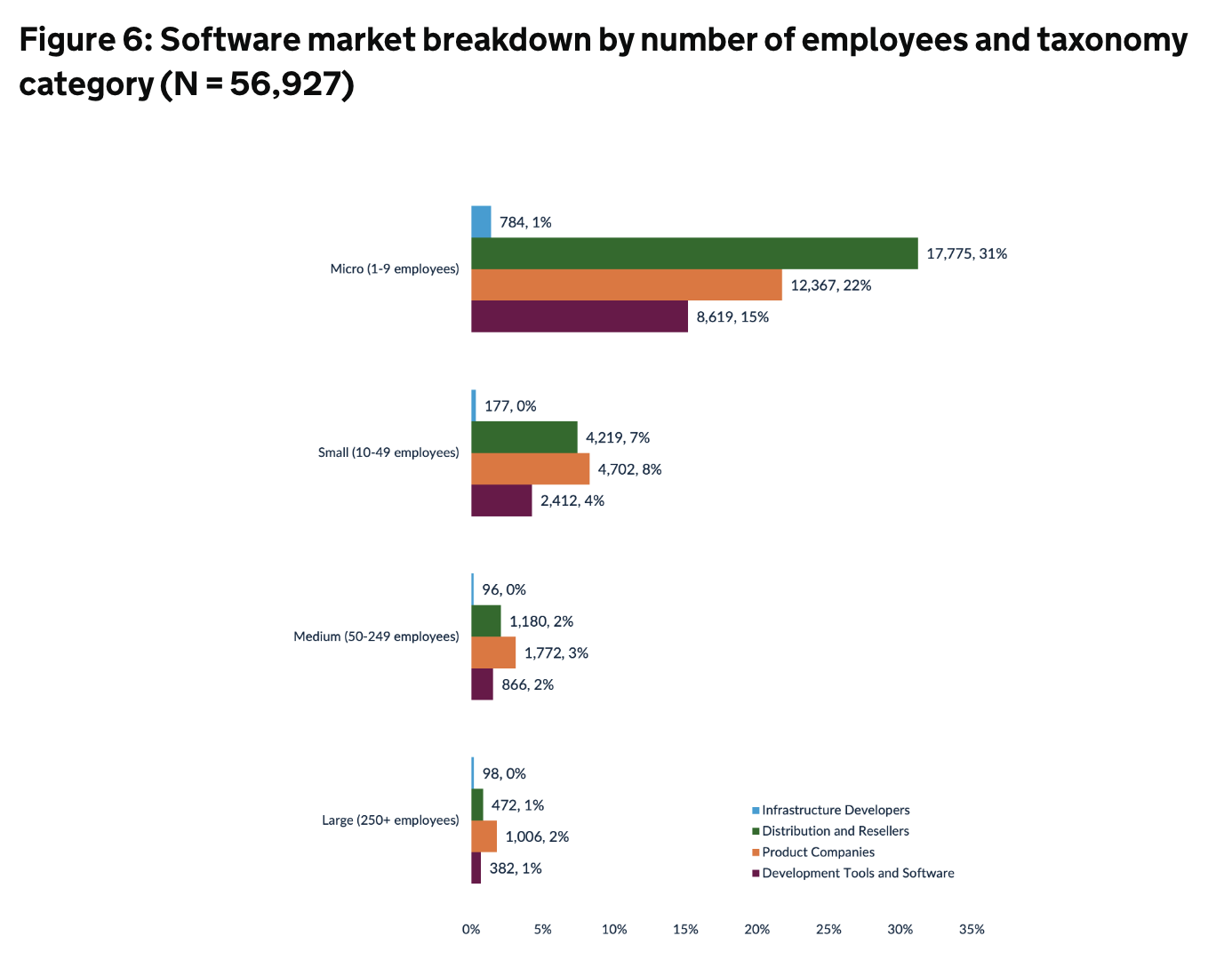
97% of companies are SMEs. Almost seven in ten (69%) employ fewer than 10 people, highlighting the importance of micro businesses in the sector.
Resellers represent the largest segment (42%). Software product companies account for 34%, followed by development tools and software providers (21%) and infrastructure developers (2%).
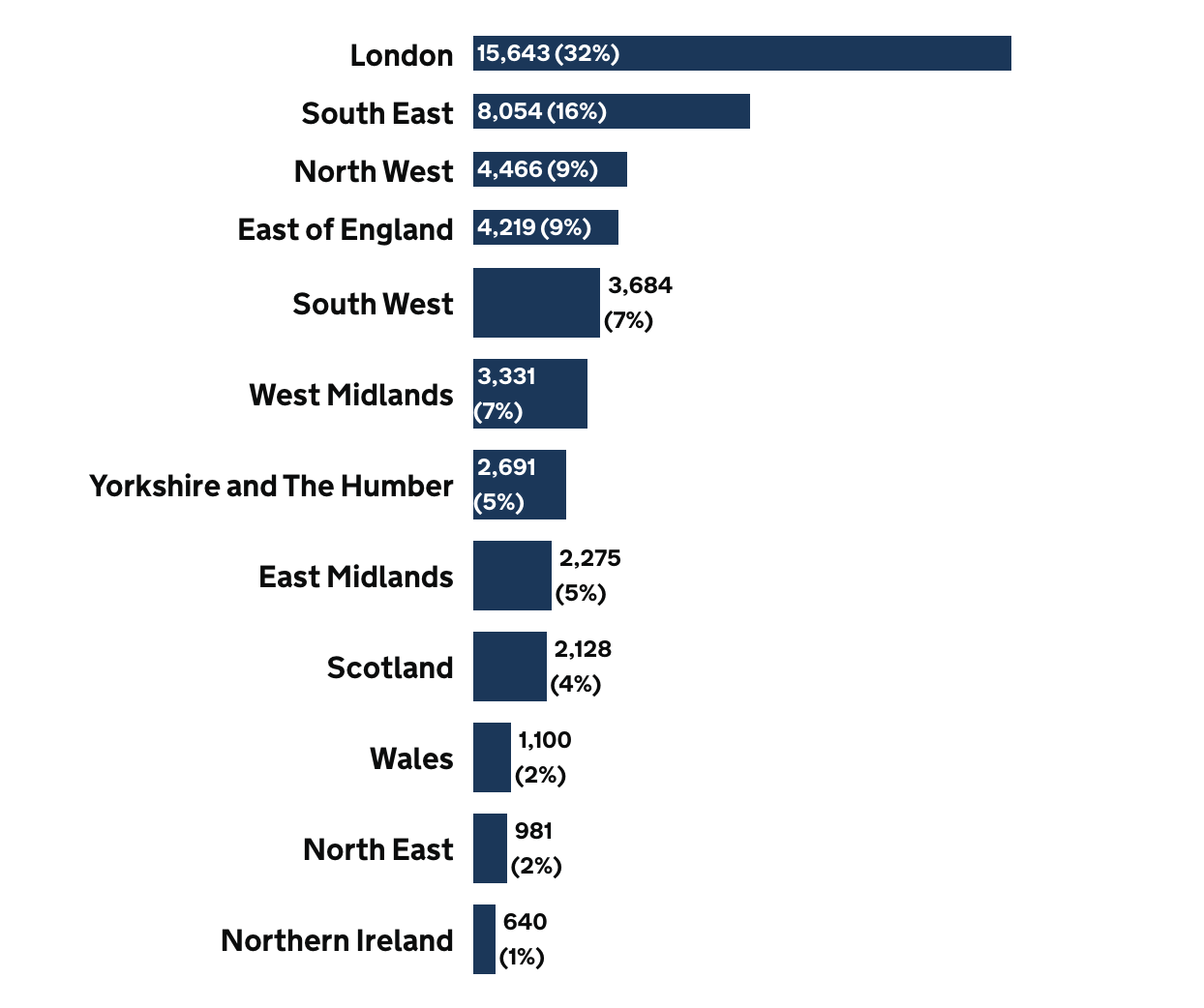
London and the South East account for 48% of software companies. The findings highlight the significant geographical concentration of the sector.
AI and cloud technologies are reshaping the market. Industry interviews identify artificial intelligence as the most significant emerging trend, alongside the continued shift towards cloud and Software-as-a-Service (SaaS) delivery models.
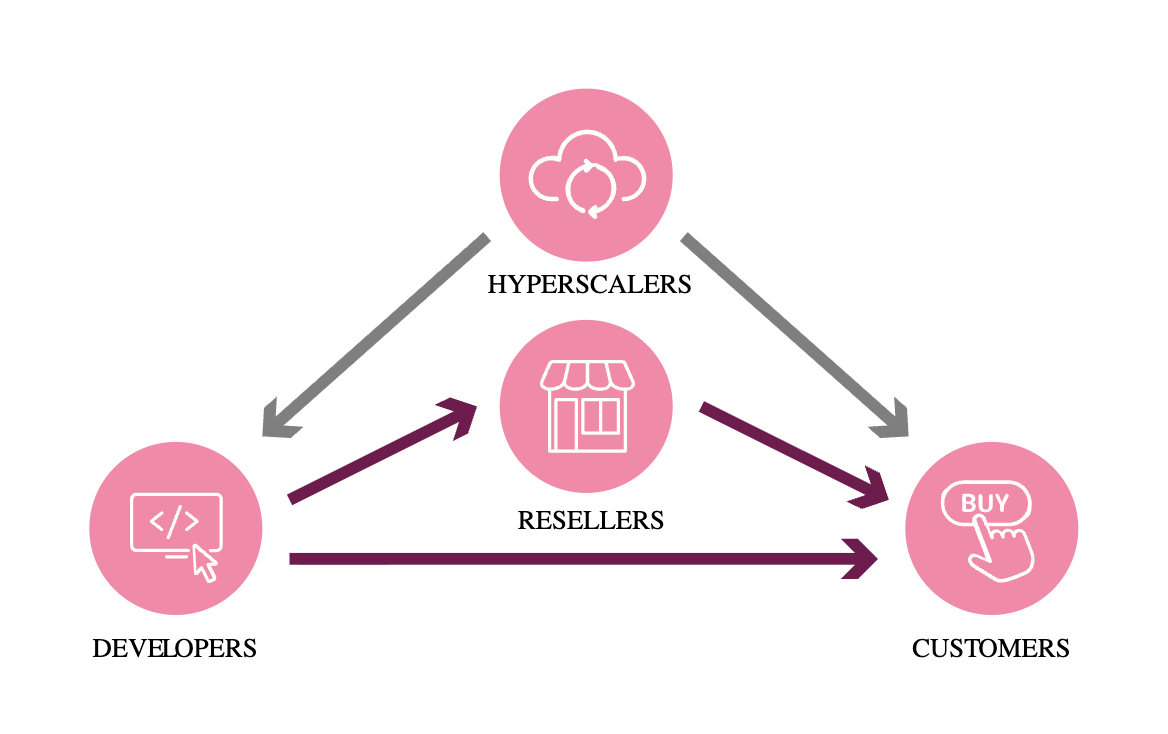
The study also highlights the influence of cloud hyperscalers and the important role of resellers in connecting software developers with customers, particularly when entering new markets.
Software security is another major theme. While awareness of security standards is relatively high, adoption is often driven by customer requirements and procurement expectations rather than voluntary initiatives.
Glass.AI's role: Building a detailed evidence base of the UK software market
Mapping the software sector presents a significant research challenge.
Traditional company databases and Standard Industrial Classification (SIC) codes do not always capture the diversity of activities undertaken by software businesses. Companies developing specialised software products, distributing third-party solutions or providing development tools can share the same industry codes as businesses operating in entirely different markets.
For this study, Glass.AI applied its proprietary AI technology to conduct deep research across the public web, identifying companies and analysing their actual business activities rather than relying solely on predefined industry classifications.
Working closely with Plexal and DSIT, our research involved:
Large-scale company discovery: Identifying software businesses across the UK using our existing company intelligence, targeted web research and additional industry sources.
Deep web research and classification: Analysing companies' websites and other public information to understand their products, services and activities, and classify them against the study's software market taxonomy.
Company data enrichment: Combining web-derived intelligence with information from Companies House and LinkedIn to capture company characteristics, including location and employment size.
Validation and quality assurance: Refining the dataset through iterative reviews, evidence-based classification and qualitative and quantitative checks.
This approach enabled Glass.AI to build a granular, taxonomy-aligned dataset covering more than 62,000 companies, providing the quantitative foundation for Plexal's wider market analysis.
Better evidence for government research and policymaking
The findings will help inform UK Government policy on software security, including efforts to encourage adoption of the Software Security Code of Practice.
Understanding the composition of the sector is particularly important when designing policies that need to reach thousands of businesses with very different capabilities, resources and roles within the software supply chain.
The study also demonstrates how AI-driven web research can complement traditional statistical and survey-based approaches.
Rather than relying exclusively on existing company registers or static industry classifications, Glass.AI's technology can discover and analyse businesses at scale, using evidence of their products, services and commercial activities to build a more detailed picture of a market.
This approach is particularly valuable for complex and fast-evolving sectors, where conventional datasets often struggle to capture the full breadth of business activity.
We enjoyed working with Plexal on this important research and contributing the company intelligence underpinning the study.
The project builds on Glass.AI's wider work supporting UK Government research into sectors including cybersecurity, artificial intelligence and life sciences, demonstrating how evidence-based AI can help policymakers better understand the structure and evolution of the economy.
Read the full UK Software Market Analysis published by the UK Government.
If you have a research challenge that would benefit from an evidence-led deep research approach, then get in touch.